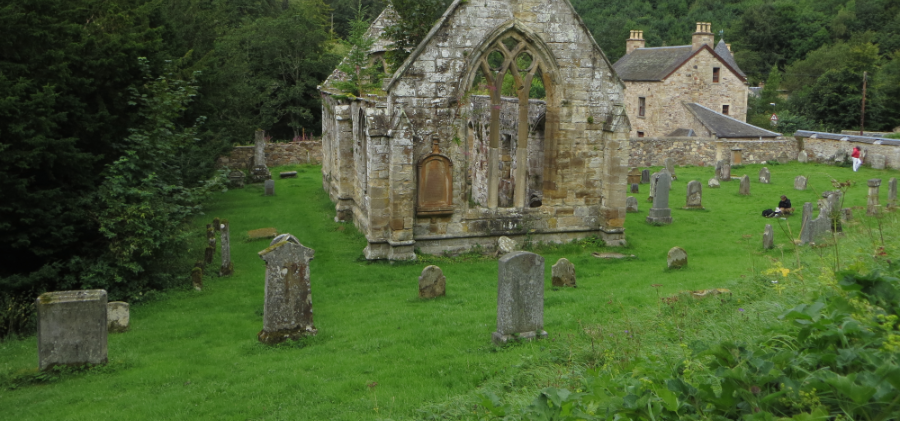
Graves in Temple Old Kirk kirkyard
Explore the poignant stories behind some of the most remarkable graves in Temple Old Kirk's ancient kirkyard. This page offers a glimpse into the lives and legacies of those laid to rest here, showing both their memorials and the history they represent.
The grave of John Craig
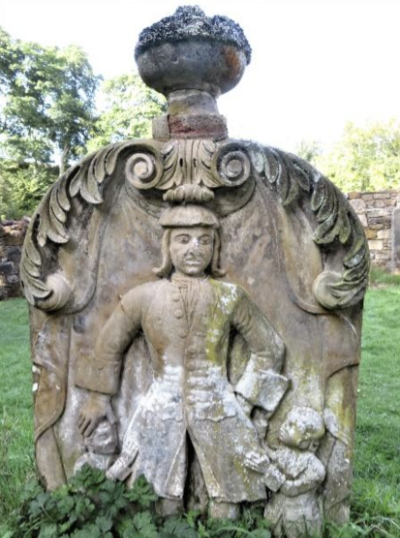 There are several remarkable headstones in Temple graveyard, but perhaps the most remarkable is that of John Craig, who died in 1742. John
stands at the west end of Temple Old Kirk, near the door. He was a farmer at Outerston, a mile up the road towards the Moorfoot hills, and
he is shown in his best Sunday coat, flanked by his two sons.
There are several remarkable headstones in Temple graveyard, but perhaps the most remarkable is that of John Craig, who died in 1742. John
stands at the west end of Temple Old Kirk, near the door. He was a farmer at Outerston, a mile up the road towards the Moorfoot hills, and
he is shown in his best Sunday coat, flanked by his two sons.
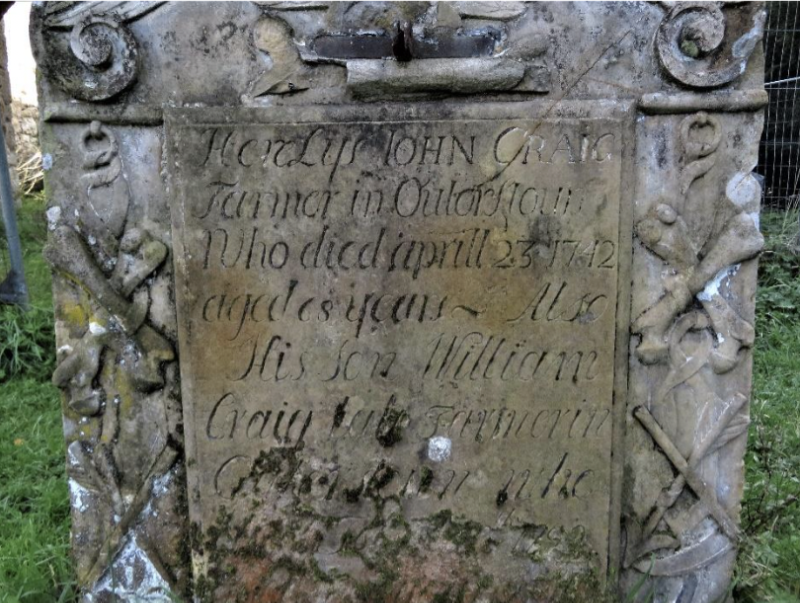
The back of the headstone has an inscription, and on either side of the inscription are images of the scythe and the dart - the weapons of death - but here they are entwined with ribbons. By the middle of the 18th century the iconography permitted on gravestones in Scotland was much more relaxed and less threatening that it had been earlier.
The oldest grave
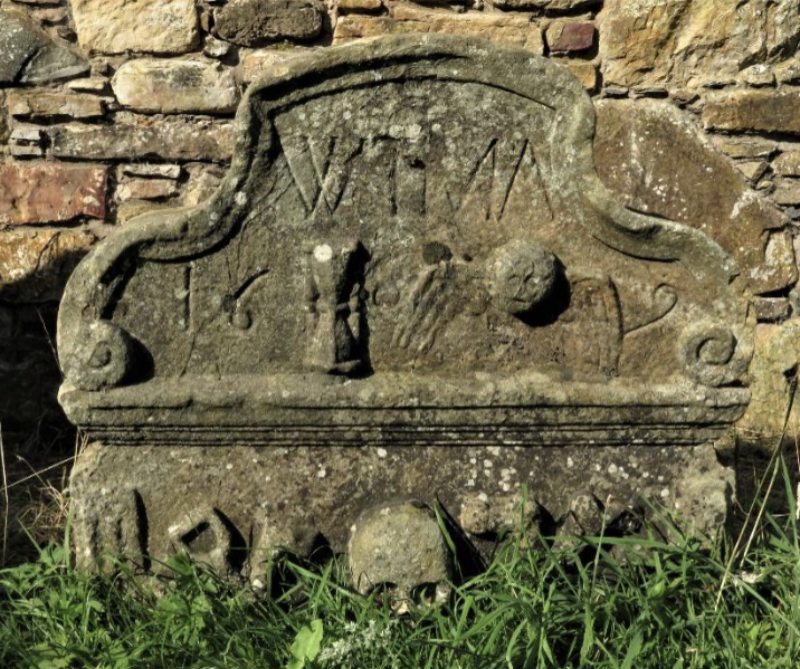 The earliest headstone at Temple Old Kirk stands not far away, beside the wall that separates the churchyard from the Old Manse. It is dated
1689, though the date is not easy to read. Below the initials of the deceased couple you can see the figures 1 and 6, then an hourglass, then
the figure 8, then a flying soul - and finally an ornate figure 9.
The earliest headstone at Temple Old Kirk stands not far away, beside the wall that separates the churchyard from the Old Manse. It is dated
1689, though the date is not easy to read. Below the initials of the deceased couple you can see the figures 1 and 6, then an hourglass, then
the figure 8, then a flying soul - and finally an ornate figure 9.
Beneath, though almost hidden by grass, are the skull, crossed bones, and on the left the sexton's tools - very characteristic images for this period.
1689 was a significant date for Scotland; it marked the coronation of the Protestant William and Mary, following the ousting of James VII, Mary's father, at the 'Glorious Revolution' the previous year; from now on Presbyterianism in Scotland was dominant.
Workman's tools
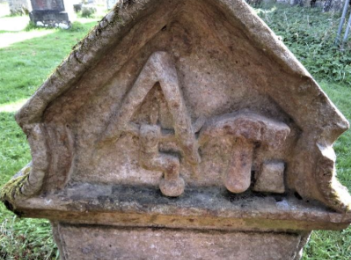
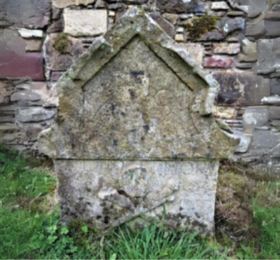
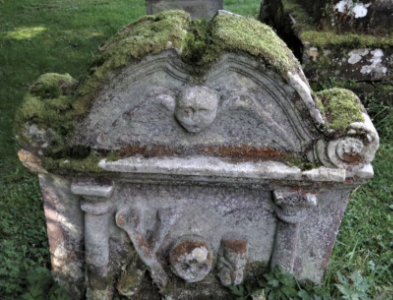
Not far away stands this stone, dated 1691. It is the earliest of several stones which bear images of a workman's tools. Betty Willsher, the authority on Scottish gravestones, was uncertain whether the deceased was a blacksmith or a slater.
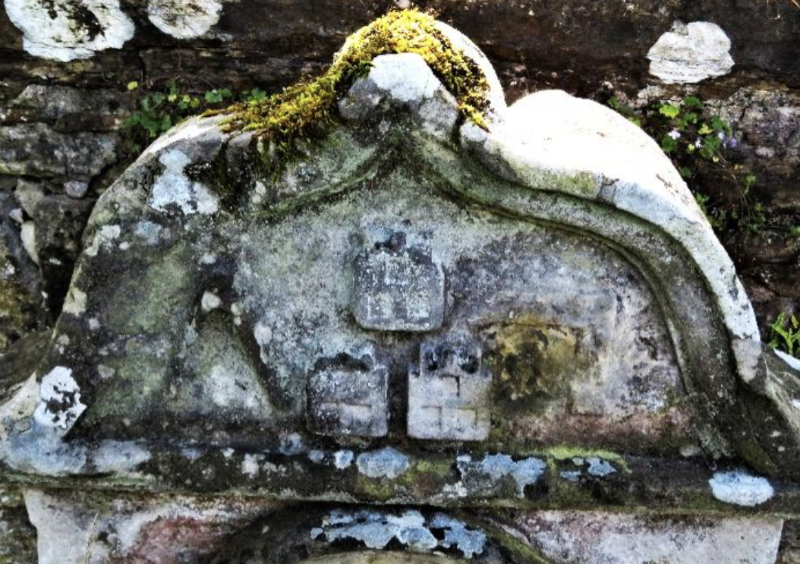
Below is a headstone which leans up against the north wall of the Old Kirk. It shows an interesting combination of symbols. The three towers in the centre are the symbol of a mason. But the dividers and the set-square on either side are symbols of a wright.
So we can deduce that this is a memorial to a man who worked in both stone and wood. Some people claim that these symbols represent a freemason, but the symbols of freemasonry are quite distinct, and quite different - there is an interesting headstone to a freemason at Greyfriars in Edinburgh.
Ministers' memorials
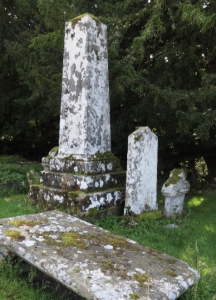
This obelisk is the memorial to James Goldie, who served as minister at Temple for 58 years until his death in 1847. It was James Goldie who supervised the move to the New Kirk on Shillinghill, just across the road, in 1832. His obelisk is notable for the detailed provisions of his will inscribed on it.
Nearby is the memorial to James Goldie's father, John, who was minister at Temple before him. The inscription on John Goldie's memorial is in Latin - not unusual for a minister. And it wasn't unusual for the office of minister to be passed on from father to son - obviously with the consent of the heritors - the major landowners in a parish. It was largely discontent at this undemocratic procedure that led to the great Disruption in the Church of Scotland in 1843, and the establishment of the Free Church.
Temple Old Kirk graves & local industry
Two of the occupations represented on Temple gravestones are rather unusual; coalmining, and gunpowder manufacture. The second came about largely because of the demands of the first; a gunpowder works was established at Stobs Mills in Gorebridge in 1794, and, encouraged by the demand brought about by the Napoleonic wars, another was opened at Roslin Glen sometime later. Both were the scenes of several fatal explosions. One of the headstones leaning up against the north wall of the Old Kirk bears the inscription
'Here lyes the body of Nicol Thomson, who died at Stobs Powder Mill 30th June 1803, aged 32 years'
 Temple lies on the edge of the Midlothian coal-field, and there have been coal-mines in the village within living memory. Yet memorials to
coal-miners are quite uncommon.
Temple lies on the edge of the Midlothian coal-field, and there have been coal-mines in the village within living memory. Yet memorials to
coal-miners are quite uncommon.
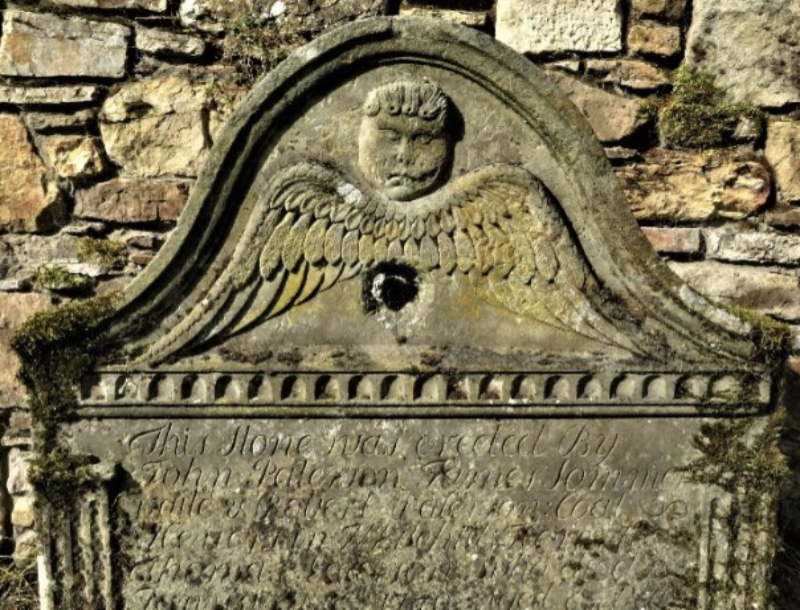
At Temple Old Kirk is this fine example:
'This stone was erected by James Paterson, James Sommervaile and Robert Paterson: coal-hewers in Whitehill: Here lies Thomas Paterson who died January 16th 1740 aged 65 years.'
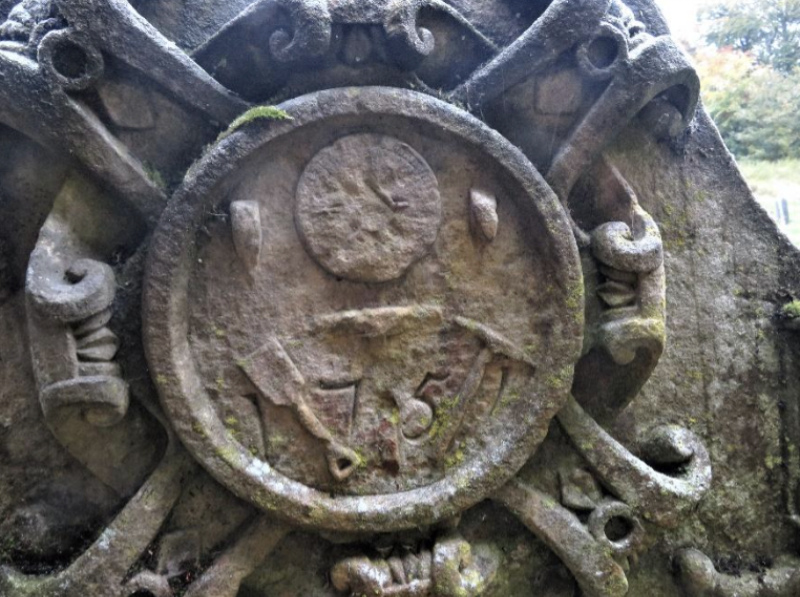 The reverse shows the date 1751 - the men who erected this stone may have taken that many years to raise the money for it; but it is
beautifully carved, and in remarkable condition for its age. In addition to the date, it shows a miner's tools, shovel, sledge-hammer, and
wedges, together with a compass. A compass was a vital tool for finding your way around underground in dim light.
The reverse shows the date 1751 - the men who erected this stone may have taken that many years to raise the money for it; but it is
beautifully carved, and in remarkable condition for its age. In addition to the date, it shows a miner's tools, shovel, sledge-hammer, and
wedges, together with a compass. A compass was a vital tool for finding your way around underground in dim light.
Find out how you make a difference at Temple Old Kirk
If you love the graves in the kirkyard as much as we do, you might be curious about how you can help in our conservation efforts, and ensure many, many more people can come and appreciate this historic, atmospheric site.
Discover Temple Old Kirk today
Learn about what you can see and experience at the site today.
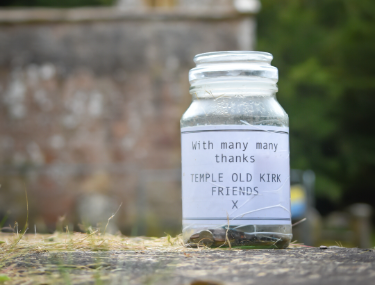
Support Temple Old Kirk Friends
Find out more about how you can support the Temple Old Kirk Friends.