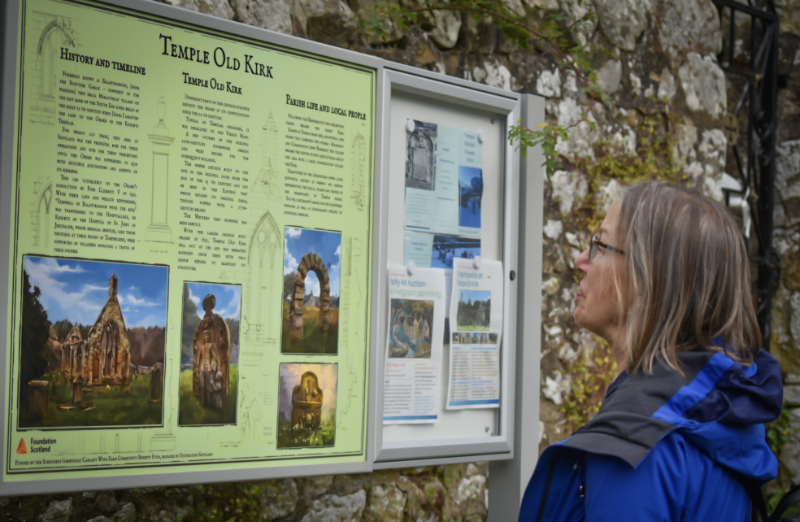
Discover Temple Old Kirk Today
When you come to visit the Old Kirk, there is plenty to look out for. Here are a few things that might interest you as you walk around the beautiful landscape.
What will you see if you visit Temple Old Kirk today?
As you walk down Shillinghill towards Temple Old Kirk from Temple Village, you enter a tranquil green bowl surrounded by trees. When the Knights Templar were here in the 12th and 13th centuries, and 'Temple Village' was known as 'Balantrodoch - the Settlement of the Warriors', this area would have been a hive of activity, with stables, a watermill, and artisans' workshops in addition to the more formal buildings. Wood - and charcoal - would have been the main sources of fuel, and hence the area would have been much less wooded than it is now.
The last traces of the Templars
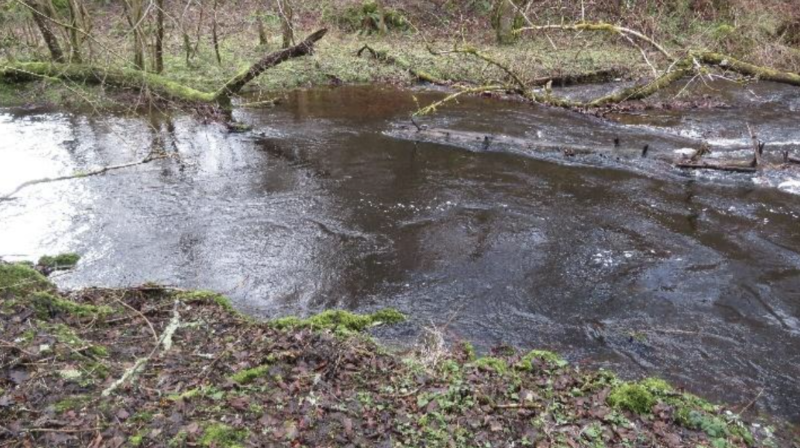
Today, the South Esk River winds through the woods just out of sight. In Templar times there were no bridges over the South Esk, and the Templars chose this site for their Scottish headquarters (or 'Preceptory' as they called it) because of its proximity to a ford over the South Esk river
If you walk all the way around the Old Kirk to the side furthest away from the gate, you will be able to hear the South Esk, and if you venture through the beautiful big yew trees and peer down the bank, you will spot the river running below.
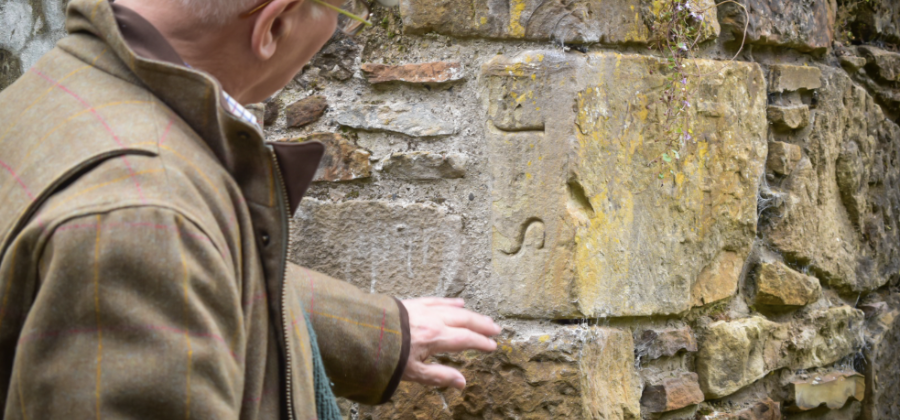
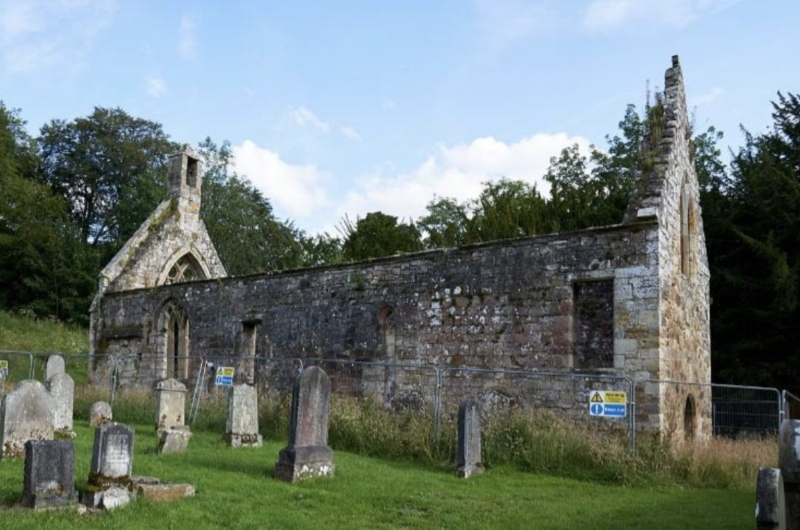
There is frustratingly little evidence of the Templars' time here; but there is one piece of masonry which almost certainly dates from Templar times, placed high up on the belfry of the Old Kirk. It's hard to spot from ground level, unless you have your binoculars with you.
This belfry dates from around 1630, but the stone itself is very much older, so it must originally have been placed elsewhere. The stone carries an inscription, filled with lead.
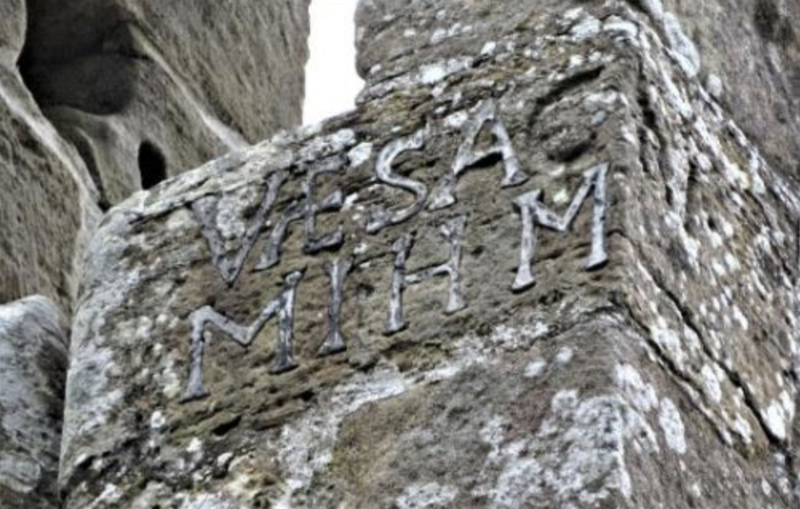
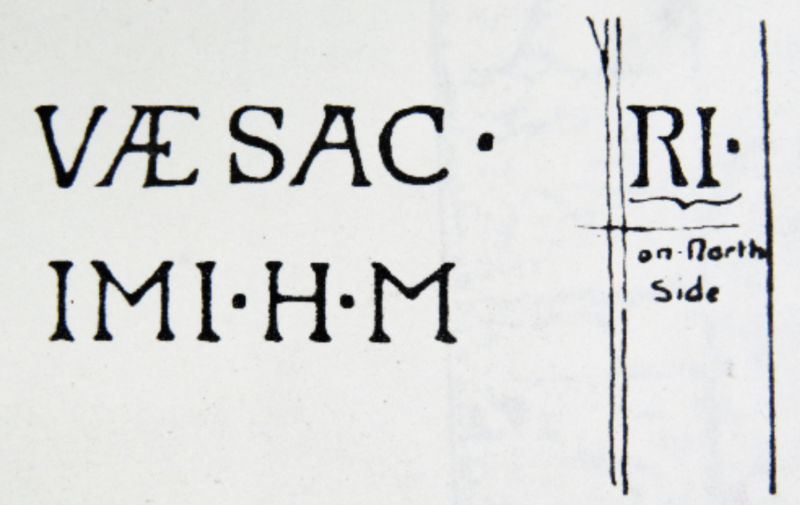
This inscription has been interpreted as 'The Sacred Council of Vienne, to the Knights of St John of Jerusalem and of Malta' referring to the Council of 1312 by which the lands of the Knights Templar were granted to the Order of the Knights Hospitaller. (The letters 'RI' are thought to be a later mason's mark, made by the builder who erected the belfry)
Temple Old Kirk is believed to have been built over the foundations of the Knights Templar Church at Balantrodoch, some time after the Order of Knights Templar was suppressed. It became the Parish Church of Temple in the early 15th century. Though it was extensively altered at the Reformation of 1560, many of the original pre-Reformation features of the Old Kirk can still be seen.
Looking inside the Old Kirk
In the north-east corner you will find a tomb niche, which would probably have contained an effigy of the person who originally endowed the Old Kirk - almost certainly a member of the Knights Hospitaller; this was probably removed or destroyed at the Reformation.
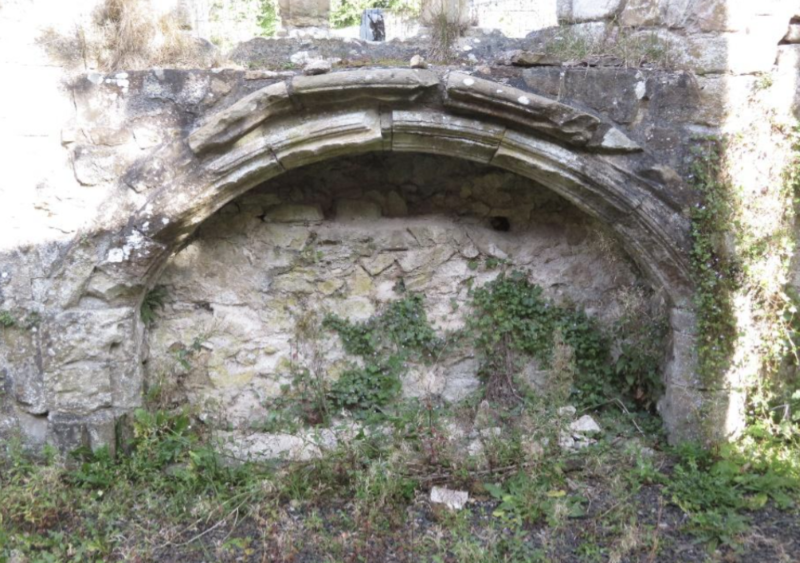
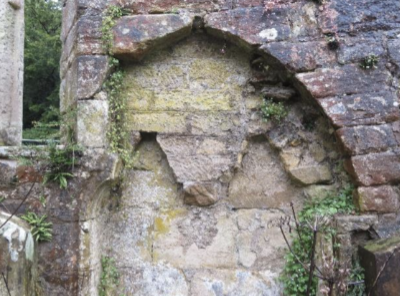
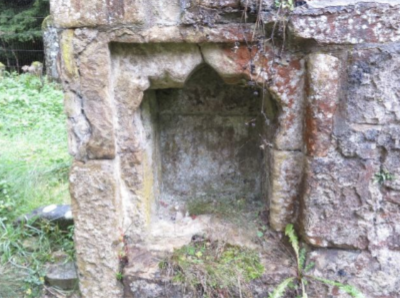
On the south wall are the remains of two sedilia, and a recess which would have held a piscina.
Sedilia were seats for visiting clergy to use during a service. The piscina was a basin with a drain, beside the altar, where communion vessels were washed, and leftover wine was disposed of. At a time when witchcraft was widely believed in, it was thought important that sacred materials such as consecrated bread and wine should be disposed of safely, so they could not be put to profane uses.
A floating door and a ghost arch
In 1630, the Old Kirk was extensively remodelled. Some nearby parish churches (such as Clerkington and Moorfoot) had been closed through lack of funds, and Temple Old Kirk was now too small to accommodate its expanded congregation. Stephen Boyd, the laird of Temple, volunteered to extend the Old Kirk at his own expense.
Boyd added some fourteen feet to the western end of the Old Kirk, and erected a belfry on the east gable. If you spot a door seemingly floating halfway up the wall of the Old Kirk, this was the door to the Temple Loft - for the use of Stephen Boyd and his family. It was reached by a flight of wooden stairs on the exterior of the building.
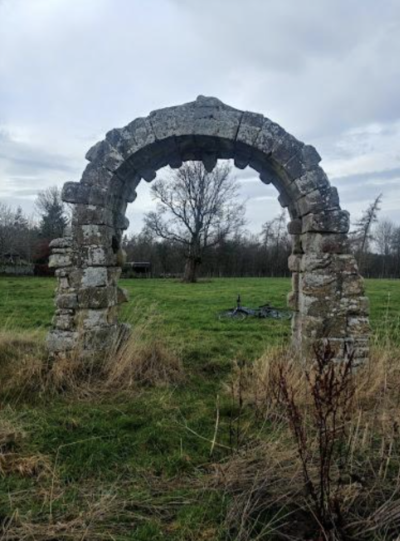
Stephen Boyd lived at Temple House - which used to stand on the east side of Temple's main street. No vestige of Temple House now remains, except this archway in the field beside the children's playground.
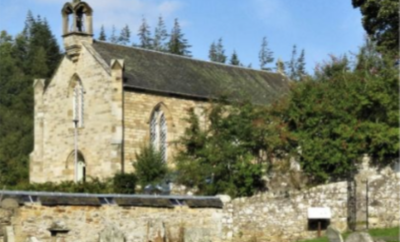
After Stephen Boyd's alterations, Temple Old Kirk remained substantially unchanged until it was replaced by a new Kirk, erected on Shillinghill in 1832, which can be seen prominently peering over the Kirkyard wall.
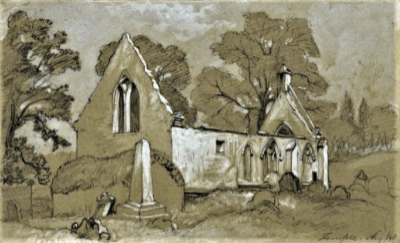
An 1849 drawing by James Drummond of Temple Old Kirk shows it already roofless; Robert Dundas at nearby Arniston had arranged for the roof to be removed, as village children had taken to playing within the ruined building, and he was concerned for their safety.
The graves in the kirkyard
Discover Temple Old Kirk today
Learn about what you can see and experience at the site today.
Support Temple Old Kirk Friends
Find out more about how you can support the Temple Old Kirk Friends.